
Novel AI has transformed the way writers approach storytelling, offering a modern solution for brainstorming, drafting, and expanding creative ideas. Whether someone is writing fantasy novels, romance stories, science fiction adventures, or interactive roleplay content, this powerful AI writing platform helps generate unique and engaging text with impressive speed. It combines advanced artificial intelligence with creative writing tools to support authors at every stage of the writing journey.
Writers often face challenges such as writer’s block, lack of inspiration, or difficulty maintaining consistency in long-form storytelling. Novel AI helps solve these problems by acting as a creative partner rather than simply a writing machine. It provides suggestions, builds scenes, develops characters, and keeps track of narrative flow, making it highly valuable for both beginners and experienced authors. Its growing popularity reflects how technology is becoming a trusted companion in the world of fiction writing.
Understanding How Novel AI Works
Novel AI uses advanced natural language processing and machine learning models trained on large volumes of text to understand writing patterns, storytelling structures, and language flow. This allows the system to generate content that feels natural, imaginative, and relevant to the writer’s prompt. Instead of producing random sentences, it predicts what should come next in a story based on context, tone, and narrative direction.
The platform is designed to maintain story consistency by remembering previous parts of the narrative. This is especially useful for long novels where characters, settings, and plotlines must remain connected. Writers can guide the AI using prompts, instructions, and memory settings, helping the tool stay aligned with the intended story path. This creates a smoother and more reliable writing experience compared to basic text generators.
Key Features of Novel AI
One of the strongest features of Novel AI is its AI-powered story generation system. Writers can begin with a simple idea, such as a mysterious forest or a lost kingdom, and the platform expands it into detailed scenes and compelling narrative directions. This makes idea development much faster and helps writers discover creative possibilities they may not have considered on their own.
Character creation is another standout feature. Novel AI helps writers build personalities, backstories, motivations, and emotional depth for fictional characters. It also supports world-building by helping describe kingdoms, cities, magical systems, futuristic societies, and detailed environments. Combined with writing prompts and plot suggestions, these features turn the platform into a complete storytelling assistant rather than just a simple writing tool.
Benefits of Using Novel AI for Writers
One of the biggest benefits of using Novel AI is time efficiency. Instead of spending hours trying to create the perfect opening paragraph or struggling to connect scenes, writers can generate strong drafts quickly and focus more on editing and improving the emotional depth of the story. This speeds up the creative process without replacing the writer’s original voice.
Another major advantage is overcoming writer’s block. Every author experiences moments when ideas stop flowing, and progress feels impossible. Novel AI provides instant inspiration by suggesting dialogue, scene transitions, or plot developments that can restart momentum. For beginners, it also offers guidance and confidence, while professional writers use it to expand complex ideas and experiment with new genres more effectively.
Novel AI for Different Types of Writing
Novel AI is especially popular for fiction writing because it adapts well to different storytelling genres. Fantasy writers use it for magical kingdoms, mythical creatures, and epic adventures, while romance authors use it to create emotional tension and relationship-driven plots. Mystery and thriller writers benefit from suspense-building suggestions and unexpected plot twists that keep readers engaged.
It is also highly useful for roleplay and interactive storytelling, where users want dynamic responses and evolving storylines. Scriptwriters can generate realistic dialogue and scene descriptions for screenplays, while science fiction authors can build futuristic worlds and advanced technological concepts. This flexibility makes Novel AI appealing across multiple creative writing industries.
Novel AI Image Generation Features
Beyond text generation, Novel AI also offers image generation features that enhance visual storytelling. Writers can create illustrations of characters, landscapes, costumes, and important scenes from their stories. This helps authors visualize their fictional worlds and maintain consistency when describing appearance and atmosphere in their writing.
Visual support is particularly helpful for fantasy and anime-inspired stories, where design details matter greatly. Writers can customize styles, moods, and artistic themes to match their story’s tone. This combination of text and image creation makes Novel AI more than a writing assistant—it becomes a complete creative environment where stories can be imagined both through words and visuals.
Novel AI Pricing and Subscription Plans
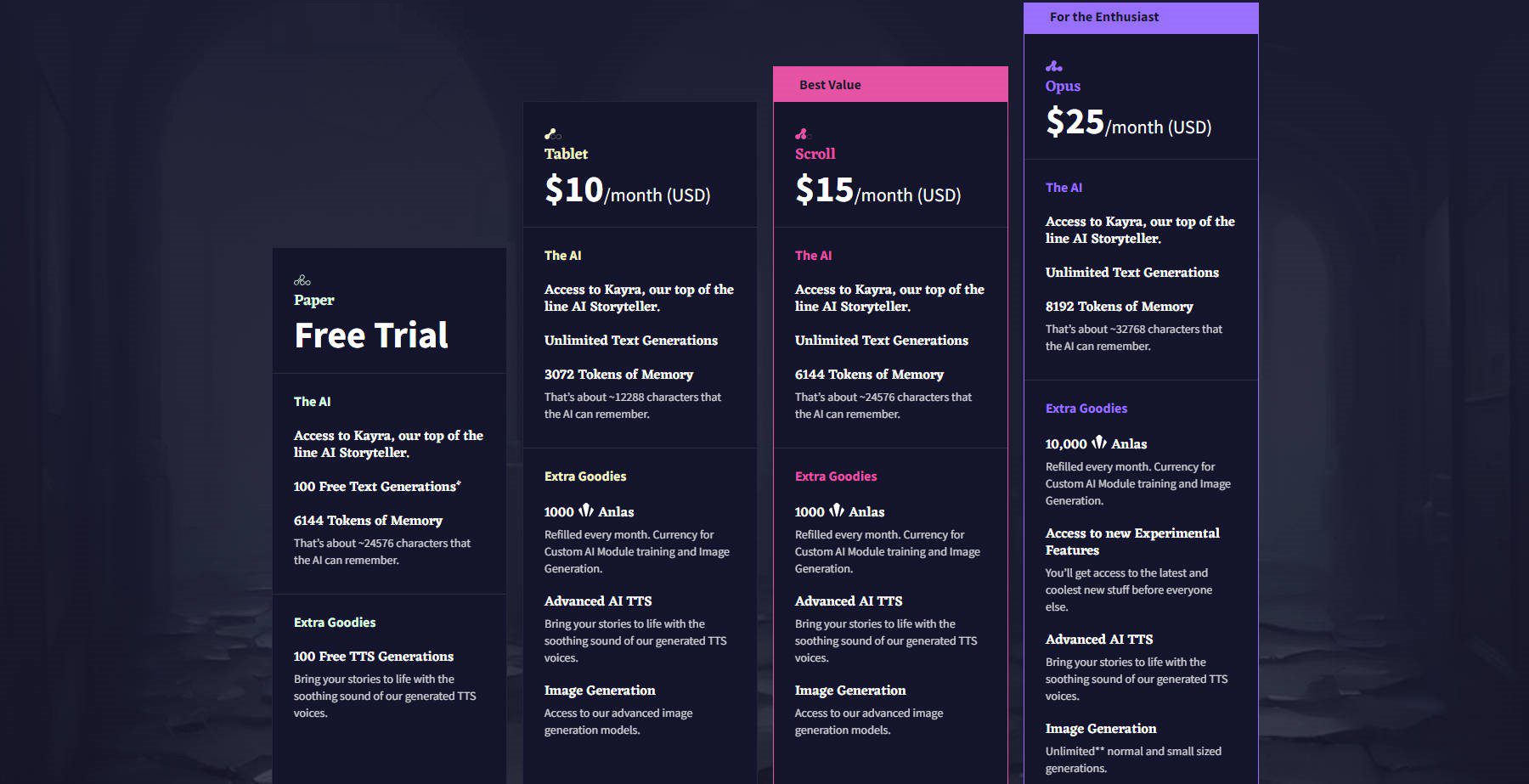
Novel AI offers both limited access and premium subscription plans depending on the level of features a writer needs. Free access may provide basic testing opportunities, but most advanced storytelling tools, memory systems, and image generation features are included in paid plans. This encourages serious users to upgrade for a better experience and stronger creative control.
Subscription tiers are usually based on usage limits, priority access, and additional customization options. For writers working on large projects such as novels or serialized fiction, the paid version often becomes a worthwhile investment. Choosing the right plan depends on how frequently the tool is used and how important AI support is in the daily writing workflow.
Pros and Cons of Novel AI
The advantages of Novel AI are clear: faster writing, stronger creativity, better brainstorming, and support for consistent storytelling. It helps writers experiment without fear and opens doors for new creative directions. For independent authors and hobby writers, it can feel like having a brainstorming partner available at any time of day.
However, there are also limitations. AI-generated content still requires human editing because emotional nuance, originality, and deep thematic meaning often need a human touch. There are also ethical concerns regarding originality and dependency on AI tools. Writers should use Novel AI as a creative assistant rather than relying on it completely for finished work.
Best Alternatives to Novel AI
Many writers compare Novel AI with ChatGPT because both offer advanced AI writing support. ChatGPT is often preferred for broader writing tasks, research assistance, and conversational idea development, while Novel AI focuses more deeply on fiction storytelling and roleplay. Each platform serves different writing goals depending on the user’s needs.
Other alternatives include Sudowrite, which is known for helping authors with descriptive writing and emotional storytelling. Several other AI writing platforms also provide fiction support, but Novel AI stands out for its storytelling focus, strong memory features, and image generation tools. Choosing the best option depends on genre preference and writing style.
Tips for Getting the Best Results from Novel AI
To get the best results from Novel AI, writers should focus on creating clear and detailed prompts. Instead of writing a short sentence like “write a fantasy story,” a stronger prompt would describe the setting, main character, conflict, and desired tone. The more specific the instruction, the better the AI can generate useful and relevant content.
Editing is equally important. AI-generated text should be refined to match the writer’s voice, emotional tone, and storytelling goals. Successful authors combine human creativity with AI efficiency rather than replacing one with the other. When used wisely, Novel AI becomes a powerful creative partner that supports imagination while preserving the uniqueness of personal storytelling.
Conclusion
Novel AI represents a major shift in the world of creative writing, giving authors new tools to explore ideas faster and with greater confidence. From character development and world-building to plot expansion and image generation, it provides strong support for storytellers across many genres. Its value lies not in replacing writers, but in helping them write better and more consistently.
For beginners, it offers guidance and inspiration. For professionals, it provides speed and creative experimentation. As AI continues to evolve, tools like Novel AI will likely become even more advanced and more deeply integrated into the writing process. Writers who learn to balance technology with personal creativity can achieve stronger results and more enjoyable storytelling experiences.
Frequently Asked Questions (FAQs)
Is Novel AI good for professional authors?
Yes, Novel AI is useful for professional authors because it helps with brainstorming, drafting, and maintaining story consistency. Many experienced writers use it to save time and expand creative possibilities.
Can Novel AI write a full novel?
Novel AI can help generate large portions of a novel, including scenes, chapters, and dialogue. However, human editing is still necessary to ensure quality, emotional depth, and originality.
Does Novel AI support image generation?
Yes, Novel AI includes image generation features that allow writers to create character art, scenes, and visual story elements that support stronger storytelling and creative planning.
Is Novel AI free to use?
Novel AI may offer limited free access, but most advanced features such as memory tools, better story generation, and image creation are usually available through paid subscription plans.
What are the best alternatives to Novel AI?
Popular alternatives include ChatGPT and Sudowrite. The best choice depends on whether the writer needs general writing help or dedicated fiction storytelling tools.





Leave a Reply