
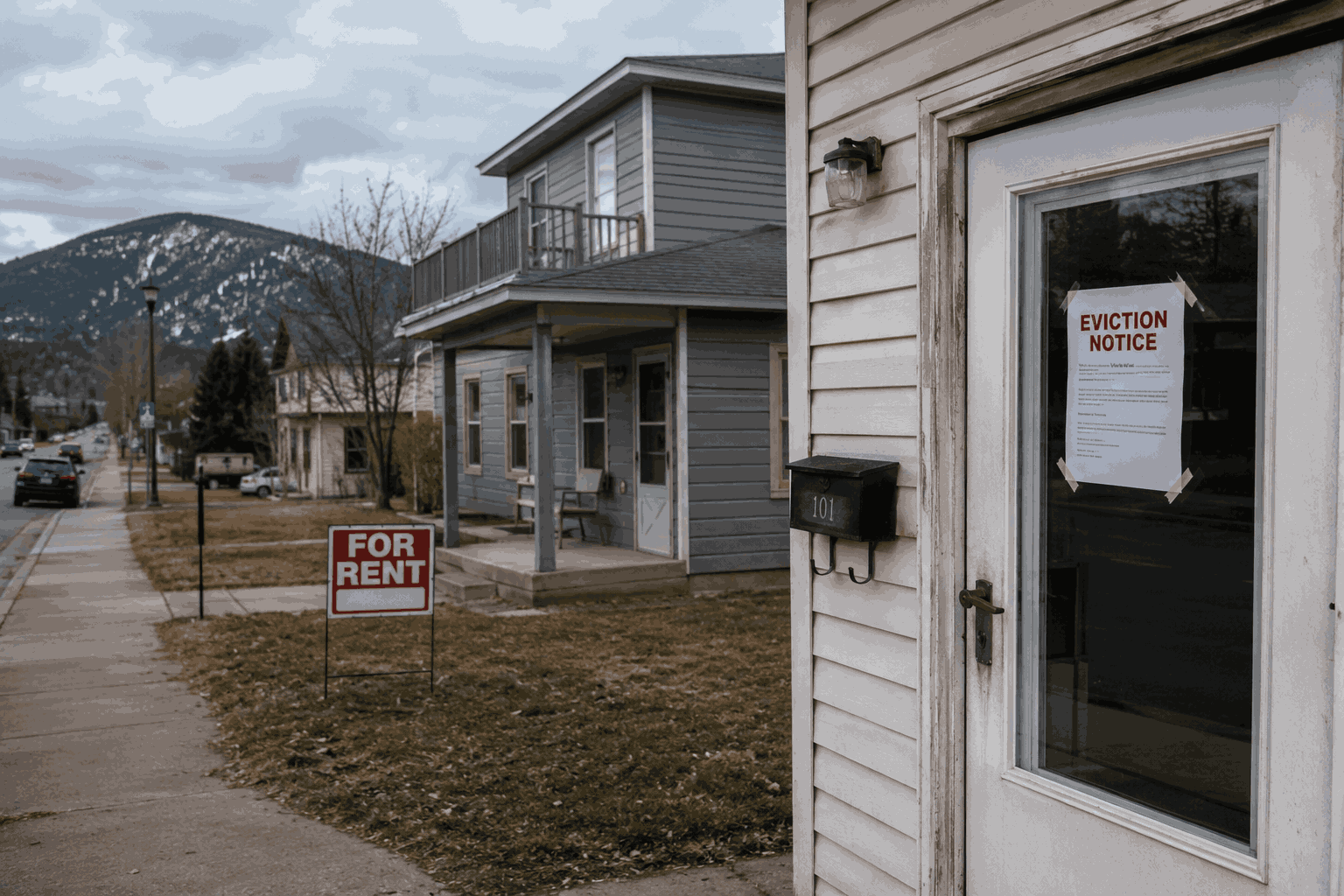
The Shoshone County Idaho eviction rate 2020 is an important housing statistic because it shows how renters, landlords, and local communities were affected during one of the most uncertain years in recent history. In 2020, Shoshone County, Idaho had an estimated formal eviction rate of 1.10%. This means that around 18 renter households were formally evicted out of an estimated 1,642 renter households. The county also recorded about 31 eviction filings, giving it an estimated eviction filing rate of 1.89%. These figures may look small on the surface, but in a rural county with a limited rental market, every eviction case can have a deep impact on families, neighborhoods, schools, employers, and local support systems.
| Key Detail | Shoshone County, Idaho 2020 |
|---|---|
| Formal eviction rate | 1.10% |
| Eviction filing rate | 1.89% |
| Estimated renter households | 1,642 |
| Estimated formal evictions | 18 |
| Estimated eviction filings | 31 |
| Statewide Idaho formal eviction rate | 0.6% |
| Statewide Idaho eviction filing rate | 1.0% |
Understanding the Shoshone County Idaho eviction rate 2020 requires more than just reading one percentage. A formal eviction rate shows how many renter households were legally removed through the court process, while an eviction filing rate shows how many landlords started eviction cases. Not every filing becomes a formal eviction, but every filing still represents pressure in the rental market. For tenants, even the beginning of an eviction case can create fear, financial stress, and long-term difficulty finding future housing. For landlords, filings may reflect unpaid rent, lease disputes, or financial strain connected to property expenses.
What Was the Shoshone County Idaho Eviction Rate in 2020?
The formal eviction rate in Shoshone County, Idaho in 2020 was estimated at 1.10%. In simple words, this means that slightly more than 1 out of every 100 renter households experienced a formal court eviction during that year. Because Shoshone County has a smaller population and a smaller renter base than urban counties, the total number of evictions was not very high. However, the rate still matters because it shows the share of renter households affected by formal eviction.
The eviction filing rate was higher, at about 1.89%. This shows that more households were taken into the legal eviction process than were formally evicted. Some cases may have been settled before final judgment. Some tenants may have paid overdue rent, moved out early, reached an agreement with the landlord, or had the case dismissed. Still, an eviction filing can be damaging even when it does not end in formal removal. It can appear in records, create stress, and make future renting harder.
Why the 2020 Eviction Rate Matters
The year 2020 was unusual because the COVID-19 pandemic affected almost every part of life. Many workers lost income, businesses reduced hours, families faced health concerns, and courts operated under changing rules. Because of these conditions, eviction data from 2020 cannot be understood like data from an ordinary year. In many areas, eviction filings dropped due to temporary protections, court delays, emergency rental assistance, and public health measures.
Even with those protections, the Shoshone County Idaho eviction rate 2020 remained higher than Idaho’s statewide formal eviction rate. Idaho’s statewide formal eviction rate in 2020 was about 0.6%, while Shoshone County’s rate was about 1.10%. This difference shows that rural counties can still experience serious housing pressure, even when statewide numbers appear lower. A state average can hide local challenges, especially in smaller communities where just a few dozen cases can represent a meaningful share of renters.
Formal Eviction Rate vs. Eviction Filing Rate
A formal eviction rate and an eviction filing rate are connected, but they are not the same thing. An eviction filing happens when a landlord begins the legal process to remove a tenant. A formal eviction happens when the court process results in a final judgment that removes the tenant from the home. This distinction is very important for understanding rental housing data.
In Shoshone County, the estimated filing rate was 1.89%, while the formal eviction rate was 1.10%. That means some filings did not become formal evictions. However, those filings still matter. A tenant who receives an eviction filing may leave the property before the court makes a final decision. Another tenant may borrow money, skip other bills, or rely on family help to avoid eviction. These outcomes do not always appear clearly in formal eviction numbers, but they are still part of the larger housing instability picture.
Shoshone County’s Local Housing Context
Shoshone County is located in northern Idaho and is connected to the Silver Valley region. The county has a history shaped by mining, mountain communities, rural development, and smaller local economies. This background matters because rural housing markets work differently from large city markets. In a city, renters may have more apartment options, more legal aid offices, more public transportation, and more nonprofit support. In a rural county, those options can be limited.
When a renter loses housing in a smaller county, finding another home nearby can be difficult. There may be fewer available units, fewer affordable rentals, and fewer landlords willing to rent to someone with an eviction record. This makes the Shoshone County Idaho eviction rate 2020 especially important. The number of formal evictions may seem modest, but the impact on each affected household can be larger because replacement housing is not always easy to find.
How Shoshone County Compared With Idaho Overall
When comparing Shoshone County with Idaho as a whole, the county’s eviction rate stands out. Idaho’s statewide formal eviction rate in 2020 was about 0.6%. Shoshone County’s estimated rate was 1.10%. That means Shoshone County’s formal eviction rate was almost double the statewide rate. The filing rate also followed a similar pattern. Idaho’s statewide eviction filing rate was about 1.0%, while Shoshone County’s estimated filing rate was 1.89%.
This does not mean Shoshone County had the worst housing conditions in Idaho, but it does mean the county had higher visible court-based eviction activity than the state average. In housing analysis, this kind of local difference is important. A statewide number can make the situation look stable, while county-level data can show where renters are facing more pressure. For local leaders, housing advocates, and researchers, county data is often more useful than broad statewide summaries.
Possible Reasons Behind the Higher Local Rate
There can be many reasons why a rural county has a higher eviction rate than the state average. One reason may be limited affordable housing. When rental supply is tight, tenants have fewer choices and landlords may have less flexibility. Another reason may be income instability. If many households rely on seasonal work, hourly jobs, or industries affected by economic changes, rent payments can become harder to maintain.
Another possible factor is limited access to legal and financial assistance. In larger cities, tenants may find legal aid, rental assistance offices, or tenant support organizations more easily. In rural counties, those services may be farther away or less visible. Some renters may not know what help is available. Others may not have transportation, internet access, or enough time to complete assistance applications before court deadlines. These barriers can turn a temporary financial problem into a formal eviction.
The Pandemic and Rental Housing Pressure
The pandemic created a complicated housing situation in 2020. Some renters were protected by temporary eviction rules, but those protections were not always automatic. Tenants often needed to understand forms, deadlines, eligibility rules, and court procedures. A renter who did not know how to claim protection could still face a filing. A renter who was behind on rent could also feel pressure to leave before the court process finished.
For landlords, 2020 also brought uncertainty. Some landlords depended on monthly rent to pay mortgages, property taxes, insurance, and maintenance costs. When tenants could not pay, landlords also faced financial pressure. This does not remove the hardship tenants experienced, but it helps explain why eviction filings continued even during a crisis year. The Shoshone County Idaho eviction rate 2020 reflects both tenant hardship and landlord-tenant conflict during an unstable period.
What the Eviction Data Does Not Fully Show
Formal eviction data is useful, but it does not show every housing problem. It usually counts only cases that went through the court system and ended in a formal eviction. It does not fully count informal evictions, forced moves, rent-related displacement, or tenants who left before a case was filed. In rural communities, informal displacement can be common because people may want to avoid court, public records, or conflict with landlords they know personally.
For this reason, the 1.10% formal eviction rate should be seen as a confirmed legal measure, not the full measure of housing insecurity. Some households may have moved in with relatives, left the county, lived in overcrowded housing, or accepted poor-quality housing after losing a rental. These situations may not appear in eviction records, but they are part of the broader rental hardship connected to eviction risk.
Impact of Eviction on Renters
Eviction can affect renters long after they leave a property. A formal eviction record can make it harder to pass future rental applications. Landlords often screen tenants based on court history, income, credit, and references. A renter with an eviction judgment may be seen as high risk, even if the eviction happened during a crisis year like 2020.
The emotional impact can also be serious. Families may lose stability, children may change schools, and adults may struggle to keep jobs if they have to move far away. In a county like Shoshone, where communities are smaller and housing choices may be limited, eviction can create a chain reaction. Losing one rental unit can quickly become a wider problem involving transportation, employment, education, and family support.
Impact of Eviction on Landlords and Communities
Eviction is usually discussed from the tenant’s side, but landlords and communities are also affected. Many small landlords own only one or two rental properties. If rent is not paid for several months, they may struggle with their own bills. Property owners may file eviction cases because they believe they have no other practical option. This is why prevention programs can help both sides.
For communities, eviction can increase instability. When families move suddenly, schools may lose students, employers may lose workers, and local services may face greater demand. A higher eviction rate can also suggest deeper problems such as low wages, limited affordable rentals, aging housing stock, or gaps in emergency assistance. The Shoshone County Idaho eviction rate 2020 should therefore be understood as a community issue, not only a private dispute between landlords and tenants.
Why Early Intervention Is Important
One of the clearest lessons from eviction data is that early intervention matters. Many eviction cases begin with unpaid rent. If rental assistance, payment plans, mediation, or tenant-landlord communication happens early, some filings can be avoided. Avoiding a filing is important because once a case enters court, the situation becomes more stressful and more difficult to solve.
For a rural county, early support can be especially valuable. A small number of prevented evictions can noticeably lower the local eviction rate. If Shoshone County had fewer filings in 2020, the formal eviction rate may also have been lower. This shows why local housing programs, public awareness campaigns, and easy access to assistance can make a real difference.
Housing Stability Lessons From 2020
The 2020 data teaches several important lessons about housing stability. First, emergency protections can reduce eviction activity, but they do not eliminate it. Second, rural counties need local attention because statewide averages do not always show county-level hardship. Third, formal eviction numbers likely undercount the full amount of housing displacement.
Another lesson is that renter households need support before they reach the courtroom. Once a tenant has an eviction filing, the damage may already begin. A better system would connect tenants and landlords with help as soon as rent problems start. This could include rental assistance, mediation, legal information, budgeting support, or temporary emergency aid.
Why This Keyword Is Important for Researchers and Readers
People searching for Shoshone County Idaho eviction rate 2020 are usually looking for specific housing data. They may be researchers, students, journalists, local residents, landlords, tenants, or policy writers. The keyword is important because it combines a location, a housing issue, and a specific year. This makes the search very focused.
Related topics include Shoshone County eviction filing rate, Idaho eviction rate 2020, formal eviction rate in Idaho counties, renter households in Shoshone County, Idaho housing instability, pandemic eviction data, rural eviction trends, and county-level eviction statistics. These related keywords help explain the larger meaning behind the main topic. The goal is not only to know the number but also to understand what the number says about housing risk.
Conclusion
The Shoshone County Idaho eviction rate 2020 gives a clear picture of local rental pressure during a difficult year. The county’s estimated formal eviction rate was 1.10%, based on about 18 formal evictions among roughly 1,642 renter households. Its estimated eviction filing rate was 1.89%, based on about 31 filings. Compared with Idaho’s statewide formal eviction rate of 0.6% and filing rate of 1.0%, Shoshone County showed higher eviction activity than the state average.
This data matters because eviction is not only a legal event. It is a housing crisis for tenants, a financial challenge for landlords, and a stability issue for communities. In a rural county, even a small number of formal evictions can have a large impact. The 2020 figures show why local housing data should be studied carefully, why rural renters need better support, and why early intervention can help prevent court filings from becoming formal evictions.
FAQs About Shoshone County Idaho Eviction Rate 2020
What was the Shoshone County Idaho eviction rate 2020?
The Shoshone County Idaho eviction rate 2020 was estimated at 1.10% for formal evictions. This means about 18 renter households were formally evicted out of roughly 1,642 renter households.
How many eviction filings were there in Shoshone County in 2020?
Shoshone County had an estimated 31 eviction filings in 2020. This created an estimated eviction filing rate of 1.89%.
Was Shoshone County’s eviction rate higher than Idaho’s statewide rate?
Yes, Shoshone County’s estimated formal eviction rate of 1.10% was higher than Idaho’s statewide formal eviction rate of about 0.6% in 2020.
What is the difference between an eviction filing and a formal eviction?
An eviction filing is the start of a legal eviction case. A formal eviction happens when the court process ends with a judgment that removes the tenant from the rental property.
Why is the 2020 eviction rate important?
The 2020 eviction rate is important because it shows how housing instability affected Shoshone County during the COVID-19 pandemic. It also helps researchers and local leaders understand rural rental pressure and compare county-level eviction trends with statewide data.





Leave a Reply