
Introduction
For OEM part manufacturers operating in an extremely competitive industry, any delay or increase in cost in prototypes may be more than an inconvenience; it might very well ruin the whole process. This can be attributed to the lack of integration in the designing process where designers fail to factor in the manufacturability aspects. More importantly, OEM manufactures fail to take advantage of processes such as progressive die stamping, which could give them significant benefits from their projects.
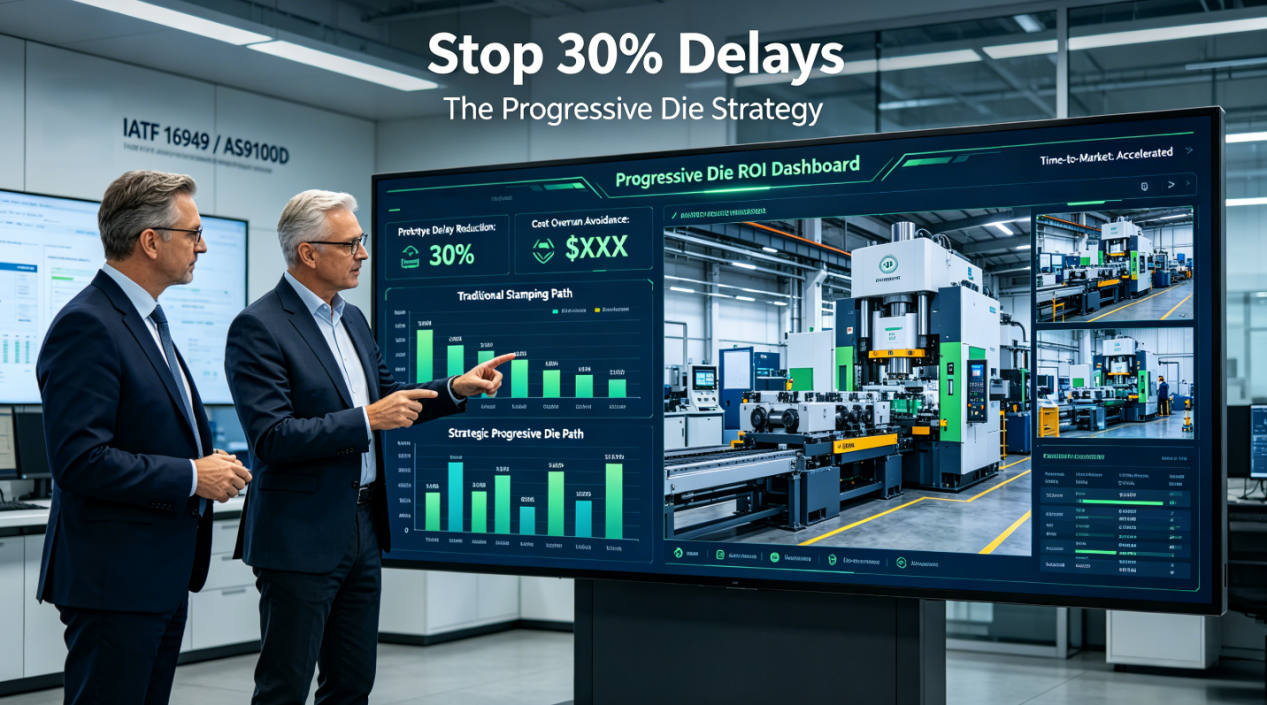
This article offers a solution based on real figures that will guide OEM manufactures through progressive die plan implementation in the early design stages. Through the comparison of the method and the use of the DFM check list, OEM manufacturers can learn to avoid at least 30 percent delays and cost overruns.
How is Strategic Planning Using Progressive Die Stamping Different from Conventional Practices?
Strategic planning through progressive die stamping transforms the conventional process flow from linear to collaborative, where the engineering process becomes simultaneous. Supplier involvement from an earlier stage helps improve manufacturability through optimizing the design prior to beginning any tooling, thereby altering the economics and timing of bespoke metalwork production.
1. The High Cost of Late Design Changes to Achieve DFM Requirements
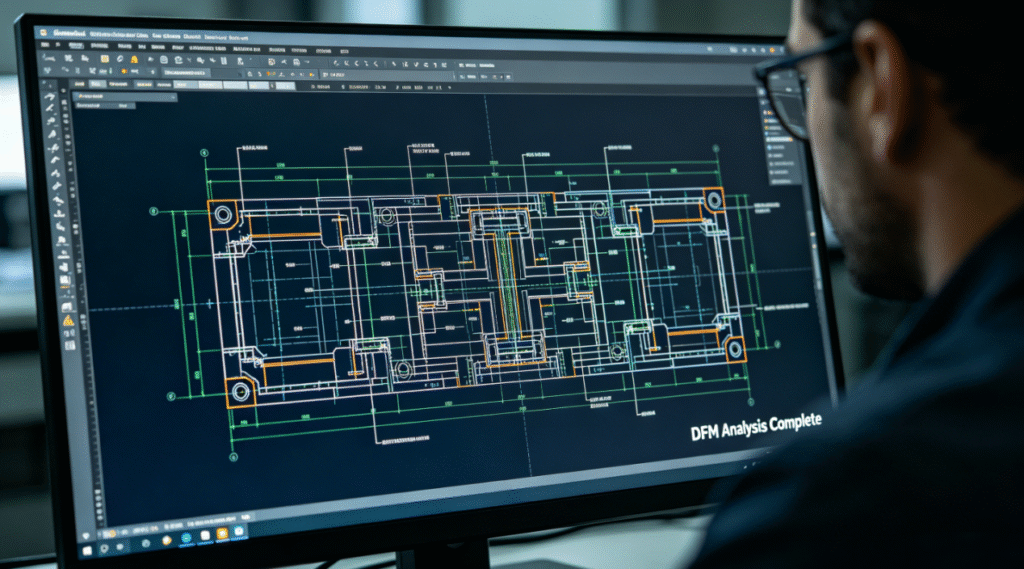
The traditional way tends to involve the consideration of manufacturing processes only once the design is frozen, where tooling is treated as a commodity and purchased. This results in discovering late design problems that require expensive modifications. Strategic planning, which utilizes well-known DFM practices such as those promoted by Society of Manufacturing Engineers (SME), involves tooling engineers during conceptualization.
2. Synergy in Material & Process Selection Since Day One
Whereas conventional stamping is likely to make concessions on materials in order to adapt to a particular process, intelligent progressive die design enables engineers to optimize the selection of materials and die design together. They will be able to suggest stronger or more formable materials, ideally suitable for the process and making the best use of material.
3. Creating a Single Source of Truth
A strategic methodology considers die design as an integral component of the part development process. With a consistent digital thread connecting part models and die simulations, engineers eliminate miscommunication associated with traditional hand-offs. As a result, they preserve the design intent across all stations of a progressive die.
Progressive Die Stamping, Transfer Die Stamping, or Compound Die Stamping – Which Is Actually Most Economical for Your Quantity?
Making the correct choice of stamping process is an important economic consideration that depends on quantity considerations, part intricacy, and desired accuracy. A comparison will prove the general economic effectiveness of progressive die stamping in the case of larger quantities, yet it should be noted where such economies begin to work.
H3: 1. Break Even Point Between Complex Parts’ Volume and Tooling Type
Compound dies can show cost-effectiveness in terms of small production volumes because of lower tooling costs. At the same time, with more complex parts, involving multiple bends or pierces, and with greater volumes reaching a certain level (more than 100,000 units), the economics of progressive dies is significantly better in relation to per unit costs.
2. The Underlying Inefficiencies of Transfer Dies
Despite the flexibility of transfer dies in accommodating large and deep-drawn parts, there is substantial non-value-added time involved in moving parts between stations. With regards to fast-paced automotive part production, this method not only restricts cycle times but also presents more variability compared to the continuous in-die flow characteristic of a properly designed progressive die.
3. Case Study: Rationale Behind Progressive Die Stamping
Suppose that there is a bracket that needs five different processes completed. In contrast to the high initial setup cost but low labor cost of using single-hit dies, progressive die stamping requires a greater investment at the start but integrates all five processes into one streamlined operation. To learn more about the process behind custom progressive die stamping parts, check out this comprehensive guide to the process step-by-step.
More Than Fast: What Are the Precision Tolerances That Can Be Reached by Modern Progressive Die Stamping?
Modern progressive die stamping does not simply revolve around fast speeds but is a technology in precision metal stamping that can be made to hold very precise tolerances. The latest developments in die making and presses make achieving this level possible even during mass production.
- Able to Hold ±0.05mm in a Production Environment: Using precision ground tooling, guided punches, and an advanced feeding system, modern progressive dies can actually maintain tolerances as tight as ±0.05mm. Such a tolerance level in precision stamping tolerances is needed especially for connector, micro-motor, and medical device components.
- The Role of GD&T in Die Design: To reach the required accuracy, it will be essential to adhere strictly to the standards set out in the ASME Y14. 5 geometric dimensioning and tolerancing specification. When writing the drawing of the part, by placing the proper datums and tolerances, the designer can guarantee the proper progression sequence, making errors accumulate less while ensuring proper functioning of the final product.
- Maintaining Consistency Through Quality Systems: Maintaining high precision during production over a million parts is a matter of implementing appropriate quality systems in the manufacture of the metal stampings. Besides having the correct dies, one needs to be confident in the implementation of the required quality management systems. Working together with a manufacturer certified in accordance with IATF 16949 or AS9100D standards guarantees the effectiveness of the procedures of incoming material control, SPC, and wear management of tools.
Steps to Designing Your Parts for Perfect Progressive Die Stamping – a DFM Guide
An efficient progressive die stamping project will always be rooted in good design practices that work within the system. Here are some valuable tips on how to achieve perfect design according to the principles of DFMA and save on custom metal fabrication costs.
1. Geometry Optimization for the Strip Layout
The first and most important aspect of DFMA is always designing parts considering the strip layout. You need to ensure enough web and edge space to provide necessary strip strength in feeding, avoid complicated cuts that reduce its strength, and design bends that could easily be made without interfering with each other’s manufacturing stages.
2. Feature Design for High-Speed Stamping
Sharp corners should not be used since these will cause localized stresses. Sharp edges are also sources of stress concentration and are prone to causing damage to the die through fatigue. In this regard, the minimum radius for any feature in the design should be as wide as the thickness of the material. Additionally, the diameter of holes should also be the same.
3. Material and Secondary Operation Concerns
Choose materials that have dependable formability and tempering qualities that will allow you to predict springback. Wherever possible, design components to be completed within the tool (e.g., in-die tapping, coining) as this can save you on costs related to secondary operations. In order to achieve optimal material selection for your stamping processes, it is imperative that you consult with a progressive metal stamping service company at this stage.
Prototypes to Mass Production – Can One Supplier Do It All Consistently?
The transition from prototypes to mass production is one of the largest delays and sources of quality variability. Having a supplier that can take care of everything from rapid prototyping through high volume progressive stamping would give you an edge in OEM parts manufacturing.
1. The Prototype to Production Continuum
An organization with integrated capabilities is able to do soft tooling or sample die runs that match the geometric shape of the final production die. True design validation can be done since there will not be a situation where there is a “prototype illusion,” which means that the prototype made using CNC machining might behave differently from the stamping process.
2. Tribal Knowledge and Process Parameters
If the same engineering group handles the prototypes and the final production, tribal knowledge about the design and possible points of failure of the part will be preserved and the organization will not have to incur the high costs associated with the learning curve. There is also an assurance that the process parameters will translate to the production phase.
3. The Advantages of a Uniform Quality Control System
When there is one single supplier applying unified system of quality control (for example ISO 9001, IATF 16949) it ensures, that standards applied in testing, sampling and acceptance will be uniform for all the phases of manufacture: from prototype to the 1 000 000th item. This assurance makes feasible engineering designing solutions.
Hidden Cost Factors and Their Prevention in Progressive Die Stamping
An initial price quote on tooling is not even a quarter of the whole cost involved in progressive die stamping process. It is vital to identify potential problems and eliminate them in advance for efficient sheet metal stamping.
- Tooling Maintenance and Durability: Badly maintained die is an invisible factory cost. The choice of tooling steel quality, design intricacies of the die (which influence sharpness), and the preventive maintenance efforts by the manufacturer will have a direct effect on the total cost of production. The lower price paid for the tool will be offset many times by regular need to maintain or replace the tooling.
- Scrap Rate and Efficiency of Die Layout: Efficiency of the die layout plays a key role in controlling the variable cost of the material. If 30% of the material is being wasted, then the loss is both material waste and time spent processing it. Also, scrap rate as a result of misfed materials is not just a cost of material but also press downtime and labor wastage.
- The Cost of Supplier Instability Risk: The most hidden cost would be the failure of the project due to unreliable suppliers of the progressive dies. The risk entails additional costs such as delayed launches and quality issues, among others, associated with changing suppliers midway through the project. Measures that may prevent the risks include performing supplier audits, looking into the financial stability of the supplier, and assessing their ability to serve in the progressive die stamping service market.
Conclusion
Overcoming the problems related to prototyping and cost overrun necessitates a complete paradigm shift, whereby companies treat progressive dies not as a purchase but as a strategy for manufacturing. The companies need to embrace DFM and utilize data-driven decision-making in selecting processes, along with working with the right supplier that is ready to offer seamless scale up.
FAQs
Q1: How long does it take to manufacture a new progressive die?
A: Time frame generally lies between 8 to 16 weeks. It depends upon the complexity level. This encompasses DFM analysis, die machining, and sampling process. Early involvement is necessary to minimize risks.
Q2: Production quantities at which product should be progressive die stamped at the minimum and maximum?
A: Although it could theoretically for more than 100,000 units, the lower complexity means that is only feasible for 25,000-50,000 units. The maximum production remains as unlimited for a continuous process.
Q3: How do you get the consistency out of progressive die stamping with high volume?
A: Consistent is good die design, process controls during stamping operation (tons vision etc), and pulling within an approved QMS procedures (IATF 16949 etc.
Q4: Is it possible for progressive dies to process materials besides metal, such as specific plastics or composites?
A: Progressive dies work well for malleable metals only. Other plastics or composite materials cannot be processed, since they may crack; injection molding should be used as an alternative.
Q5: What role does simulation software play in progressive die designing?
A: Simulation software is extremely important as far as detecting possible thinning and springback problems before any trials by using digital modeling techniques are concerned.
Author Bio
The author is an experienced precision manufacturing engineer at LS Manufacturing, which is an innovative engineering services provider that assists engineers and research professionals to address their challenging part requirements across the aerospace, medical, and automotive sectors. Using the latest technologies, the company’s certified team of IATF 16949 and AS9100D provides high-quality engineering solutions. Contact them now for a no-cost evaluation and design for manufacturability analysis of your next project.





Leave a Reply