
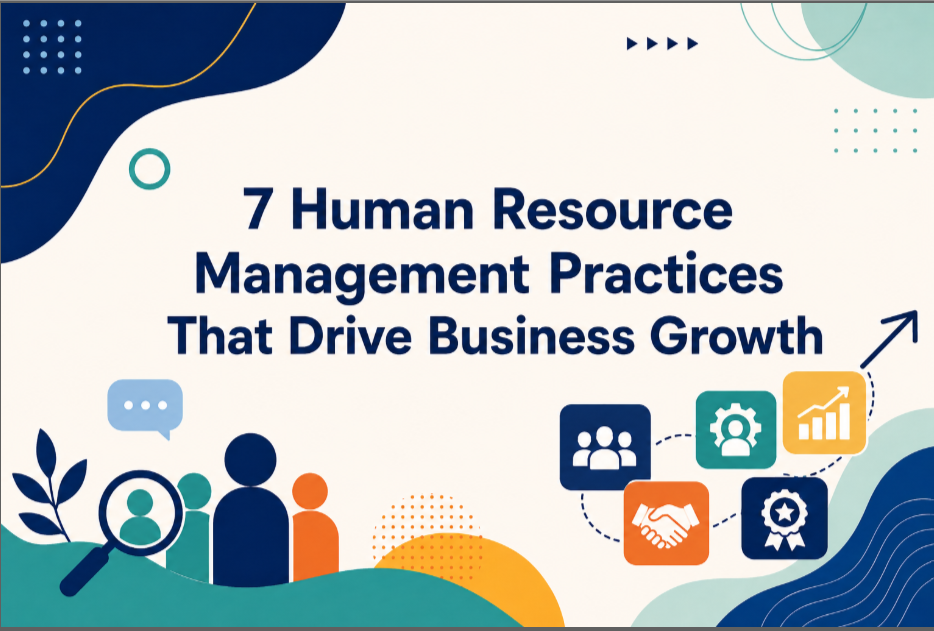
From attracting skilled talent to using workforce data, HR decisions can directly influence business results. In this blog, we will explore seven Human Resource Management practices that can drive sustainable business growth.
1. Strategic Talent Acquisition
Instead of just filling open roles, strategic talent acquisition focuses on acquiring individuals who can assist corporate expansion. HR departments take into account the knowledge, expertise, and skills that the company may require in the future. Effective talent acquisition can lower expensive hiring errors and increase the calibre of the team. Additionally, it facilitates new hires’ quicker contribution to company objectives.
Key Points:
- Focus on skills that match future company goals
- Use modern recruitment methods to reach suitable candidates
- Hire for cultural fit to support early productivity
2. Continuous Learning and Upskilling
As business needs and technology evolve, employee skills must also evolve. Employees can improve their current skills and get ready for new responsibilities by participating in regular learning and development programmes. HR professionals can better grasp the relationship between employee development and organisational performance by obtaining a CIPD Qualification. Opportunities for internal career advancement and the reduction of skill gaps can be achieved through continuous learning.
Key Points:
- Offer regular training and development opportunities
- Support leadership growth from within
- Build a workforce that embraces ongoing education
3. Performance Management
Employees who receive effective performance management are better able to understand their roles and how their efforts support organisational objectives. Managers can give regular feedback throughout the year rather than relying just on annual reviews. It is simpler to recognise accomplishments and address performance issues early when expectations are clear. This helps departments work toward quantifiable organisational results while maintaining team focus.
Key Points:
- Set measurable targets for every department
- Check progress regularly instead of relying only on yearly reviews
- Reward employees who meet or exceed their targets
4. Competitive Compensation and Benefits
Businesses may attract and keep valuable employees by offering competitive wages. HR departments should periodically assess pay and benefits to make sure they continue to be reasonable and in line with market norms. Salary is not the only form of good remuneration. The whole work experience can also be enhanced by performance incentives, health support, and recognition. Knowing What is Human Resource Management demonstrates how these procedures can affect employee retention and motivation.
Key Points:
- Check market rates to keep pay competitive
- Offer wellness and mental health programmes
- Use performance bonuses to motivate employees
5. Employee Engagement and Culture
When employees feel valued, heard and connected at work, they are more willing to perform effectively. Communication and chances to share ideas foster strong employee engagement. HR departments are important in boosting an inclusive and upbeat work environment. Concerns can be identified by listening to input before they have an impact on retention or productivity. Employee engagement can improve corporate performance and foster teamwork.
Key Points:
- Encourage open and honest communication
- Build a safe, positive and inclusive workplace
- Act on employee feedback and survey results quickly
6. Succession Planning
When key positions have no acceptable substitutes, unexpected departures can cause major problems. When positions become available, succession planning assists businesses in preparing the team to fill important roles. HR departments are able to recognise employees who have a lot of potential and offer them opportunities for growth. The knowledge required to support personnel and talent planning can be strengthened with a CIPD Qualification. During times of expansion or change, a solid internal talent pipeline can ensure business continuity.
Key Points:
- Find employees with strong potential early
- Create clear paths for promotions and career progression
- Train backup employees for critical roles
7. HR Data and Analytics
Accurate workforce data strengthens HR decisions. HR analytics can show helpful trends in hiring, training, output and employee attrition. These results can be used by HR departments to pinpoint issues and determine what needs to be improved. Understanding What is Human Resource Management includes recognising the value of workforce information in strategic decision-making. Organisations can better plan for future personnel demands and control expenses with the use of data.
Key Points:
- Track employee turnover and retention costs
- Measure how training influences team performance
- Use workforce trends to plan future recruitment and hiring needs
Conclusion
Business growth depends on more than strong products or ambitious plans. It also requires skilled people who are supported and prepared for future responsibilities. Effective Human Resource Management practices strengthen recruitment, development, performance and retention. A CIPD Qualification can further develop the knowledge needed to manage these areas effectively.
Professionals seeking practical HR learning can explore relevant training with Oakwood International and develop skills that support both employee success and sustainable organisational growth.




Leave a Reply