
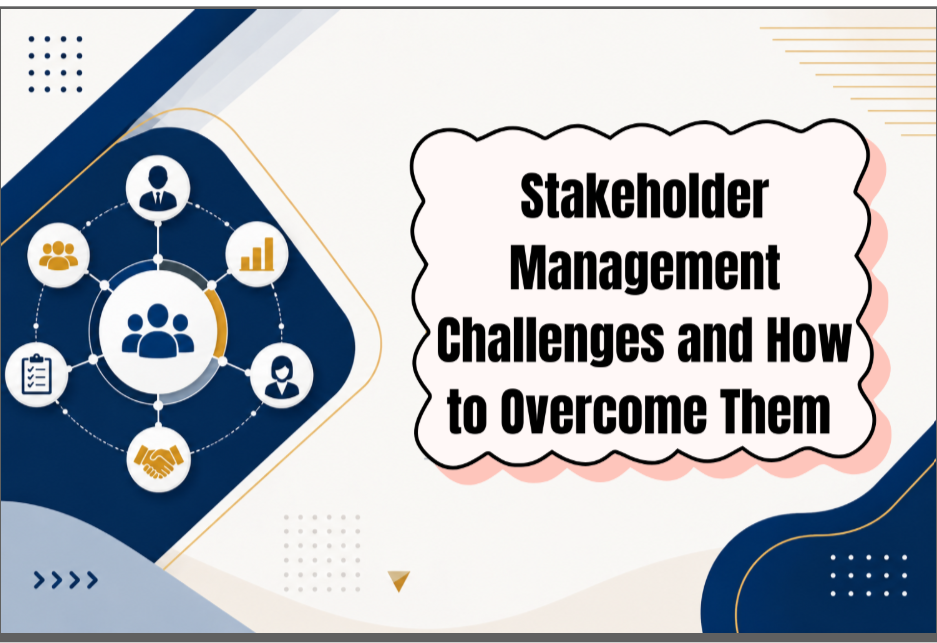
What happens when a project has a strong plan, yet the people involved keep pulling it in different directions? Managing expectations, communication and priorities can become difficult when several parties influence the same project. An ACCA Qualification helps professionals build business and decision-making skills that are useful in such situations. Understanding What is a Stakeholder also makes it easier to identify people who can influence or be affected by business decisions.
Let us explore common Stakeholder Management challenges and key ways to overcome them.
Turning Stakeholder Challenges into Stronger Project Relationships
Below are the major Stakeholder Management challenges organisations face and key ways that can help overcome them:
Conflicting Stakeholder Priorities
Different Stakeholders have different expectations for the same project. Senior executives might focus on expenses and company worth. Consumers might be more concerned with quality. Workload and deadlines may worry employees.
Tension and sluggish decision-making might result from these competing goals. Determine each Stakeholders needs first. Compare them to the primary project goals and corporate priorities. Stakeholders can better understand which requirements demand immediate attention by having clear discussions. A common understanding of priorities facilitates decision-making and lessens needless confrontation.
Poor Communication
Communication difficulties are some of the most common Stakeholder Management challenges. Stakeholders might be given inadequate information. Some may have too much detail or information that is hard to understand.
Develop a brief communication plan that describes the information requirements for each Stakeholder. Determine the frequency of updates and the most effective communication channel. Senior management may want briefings on progress, while project teams may need comprehensive reports.
Unclear Stakeholder Expectations
When Stakeholders have expectations that were never made clear, issues usually arise. They can assume that the project has specific characteristics or outcomes.
Early on, set expectations and record important agreements. Describe the project’s goals and scope. Professionals who complete ACCA Qualification can gain useful business and communication skills that facilitate more transparent conversations with various Stakeholders. It’s important for Stakeholders to know what falls outside the agreed-upon scope. Open dialogue can spot shifting expectations before they become more serious problems.
Low Stakeholder Engagement
Early on in a project, certain stakeholders might not be very interested. They raise concerns after important choices have been made.
Use this analysis to decide who should be included and when. Understanding What is a Stakeholder also helps teams understand why various people and groups need varying degrees of involvement. Invite significant people to pertinent discussions and meetings. At crucial project stages, solicit feedback. When Stakeholders can understand how their comments affect decisions, they are more likely to participate.
Resistance to Change
Change may make Stakeholders uncomfortable, especially if it modifies long-standing practices or methods of operation. A project’s implementation may be postponed and its backing diminished due to opposition.
Explain why the change is necessary and how it advances business goals. Give Stakeholders enough time to express their concerns. Professionals can assess the business impact of organisational changes with the help of skills acquired through an ACCA Qualification. Training and practical guidance can help make new procedures easier to understand. People are involved at every stage of the process in effective change management.
Lack of Trust and Transparency
Stakeholders may rapidly lose trust if information is suppressed or problems are discovered too late. If trust has been shattered, getting support might become much more challenging.
Give precise information about advancements and challenges. Teams are encouraged to take into account the information that various Stakeholders require in order to maintain confidence in a project by having a clear understanding of What is a Stakeholder. If something goes wrong, discuss everything in detail and outline the following steps. Being transparent does not entail revealing every detail.
Unequal Stakeholder Influence
A project can be influenced more by some Stakeholders than by others. Inefficient use of time and resources might result from treating everyone the same.
To determine each person’s degree of influence and interest, use a Stakeholder mapping technique. Regular consultation may be necessary with high-influence Stakeholders. Others might simply require sporadic updates. Teams are better able to concentrate their communication efforts where they are most important. As the project develops, therefore, it is important to review the map.
Conclusion
Stakeholder challenges become easier to manage when communication, trust and expectations receive attention from the start. Clear priorities can prevent conflict, while regular engagement keeps people connected to project goals. Strong Stakeholder Management also helps organisations respond to concerns before they affect progress.
Professionals looking to strengthen their business and financial knowledge can explore learning opportunities from MPES Learning. With the right approach, challenging Stakeholder relationships can become valuable partnerships that support better project outcomes.



Leave a Reply