
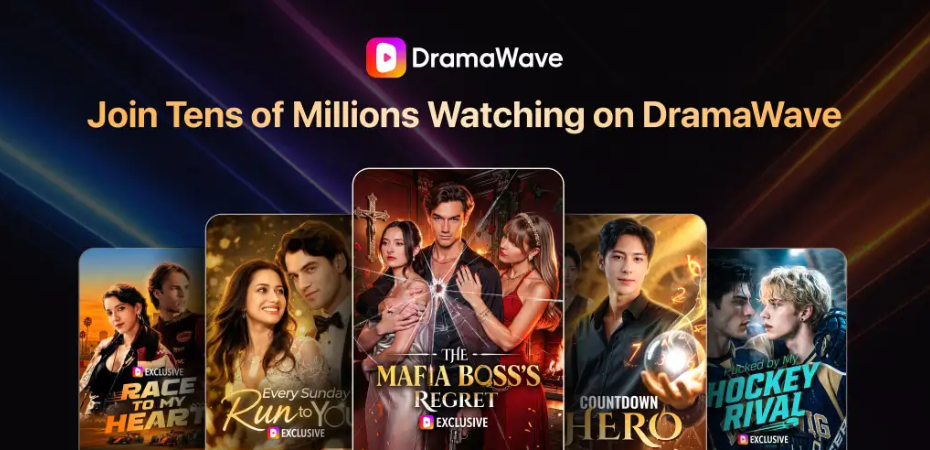
The short drama category stopped being a niche a while ago. Downloads across the format have climbed sharply over the past year, and a handful of apps — Dramawave among them — now compete hard for the same slice of attention that used to belong exclusively to TikTok and Instagram Reels. That competition is good news for viewers, because it means every app in the space is under pressure to keep improving, but it also makes picking one app to actually pay for a little more complicated than it used to be.
Rather than comparing every title on the app store, it’s more useful to line Dramawave up against the handful of apps people actually switch between: the ones with similar catalogs, similar vertical-video formats, and similar subscription structures. Here’s how that comparison actually plays out once you get past the marketing copy.
Catalog Size and Content Variety
Dramawave leans into volume. Its library skews heavily toward romance, revenge, and reverse-harem storylines, with new titles added on a near-daily basis and a recommendation algorithm that gets noticeably sharper the more you watch. Competing apps in the space tend to specialize a bit more narrowly — some lean into workplace drama and slower-burn storytelling, others push harder into fantasy and supernatural plots with bigger production budgets per episode.
Neither approach is objectively better. If you already know your genre preferences are narrow and specific, an app that specializes might serve you better than one that spreads its catalog wide. Dramawave’s advantage shows up most clearly for viewers who like variety and don’t want to feel boxed into one storytelling formula for months at a time.
Subscription Structure and Pricing
This is where the apps genuinely diverge. Dramawave runs a two-tier system — Standard and Premium — with the higher tier unlocking early access and better resolution. Several competitors instead run a single flat subscription with no tiering at all, which is simpler but offers less flexibility for viewers who only want to pay more during specific release windows.
Price-per-month comparisons across the category are close enough that they rarely decide the choice on their own. What tends to matter more is how painless the billing actually is — auto-renew behavior, whether downgrading mid-cycle is even possible, and how transparent the app is about what a promotional price reverts to once the introductory period ends. A lot of apps in this space, Dramawave included, have gotten better about surfacing that information up front over the past year, but it’s still worth checking before committing to an annual plan.
Ad Load and Viewing Interruptions
Every app in the category monetizes with some mix of subscriptions, ads, and in-app purchases, and the balance between them varies more than most people expect. Some competitors lean harder on ads even for paying subscribers, treating the subscription fee as a discount on ad load rather than a full removal of it. A Dramawave premium plan gets closer to a genuinely clean viewing experience, though as covered elsewhere, it isn’t entirely ad-free either.
For viewers who binge in long sessions, this difference compounds fast. An app that inserts a fifteen-second ad every third episode feels dramatically more intrusive over a two-hour session than the raw numbers suggest, and it’s one of the more common reasons people cite when they switch apps rather than sticking with whichever one they downloaded first.
Interface and Viewing Experience
Vertical scroll navigation has become the standard across the category, and most apps look similar at first glance: full-screen video, swipe-to-continue, comments overlaying the action if you enable them. The differences show up in the smaller details — how quickly the app buffers on weaker connections, how accurate the recommendation engine gets after a few weeks of use, and whether offline downloads actually hold up in quality or get visibly compressed.
Dramawave has generally been solid on load times and offline stability, which matters more than it sounds like it should for anyone watching during a commute or in an area with patchy signal. Some competing apps still lag here, particularly newer entrants still scaling up their content delivery infrastructure.
Managing Access Across Apps
For viewers who bounce between two or three short drama apps rather than committing to just one, keeping subscriptions organized becomes its own small chore. Every app has its own billing cycle, its own promotional pricing, and its own renewal date, and tracking all of that manually is exactly the kind of thing that leads to accidentally paying for an app you forgot you were still subscribed to.
Handling recharges and subscriptions for apps like Dramawave through a consolidated service such as LootBar takes some of that friction out of the equation, since it keeps payment history and renewal tracking in one place rather than scattered across separate app-store accounts. It doesn’t change which app is the better fit content-wise, but it makes experimenting with more than one app less of a hassle.
Which App Actually Wins
There isn’t a single winner across the board, and that’s a fair reflection of where the category is right now — genuinely competitive, with different apps optimizing for slightly different audiences. Dramawave’s strongest case is for viewers who want a wide, frequently updated catalog with tiered pricing that adapts to how much they’re actually watching in a given month. Viewers who prefer a narrower, more curated catalog or a single flat subscription without tiering might find a competitor a better long-term fit.
The category’s overall growth trajectory suggests this comparison will keep shifting. Downloads and engagement across short drama apps have continued expanding well beyond early expectations, which means the feature gaps between apps like Dramawave and its closest rivals are likely to narrow even further as everyone races to match whatever proves popular. For now, the practical move is to trial two apps side by side for a couple of weeks rather than picking based on app store ratings alone — the viewing experience differences are subtle enough that they’re hard to judge from a description.





Leave a Reply